
Is Drinking Bottled Water From a Hot Car Safe?
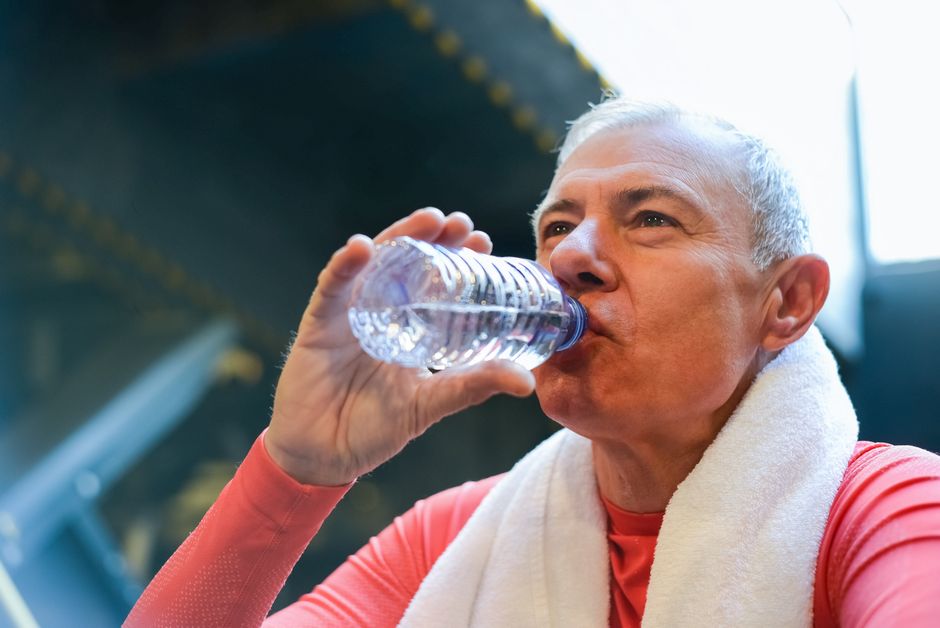
Drinking bottled water from a hot car is not automatically unsafe, but there is no universal safe time limit. An intact, sealed bottle has less handling-related contamination risk than an opened one; heat can increase chemical migration from PET over time. Discard bottles that are damaged or whose water smells or tastes unusual, and remember that normal appearance cannot rule out chemical exposure.
Is it okay to drink bottled water that has been left in a hot car?
Often, an intact sealed bottle that spent a limited, unknown period in a warm car cannot be declared unsafe from that fact alone. But there is no simple test at the point of use that turns “sealed” or “looks fine” into proof of safety.
The Centers for Disease Control and Prevention (CDC) says bottled water can be contaminated by germs or chemicals at the source, during manufacturing, shipping, storage, or after purchase. In the United States, the Food and Drug Administration regulates bottled-water safety and requires protections and testing through production. A cap that remains sealed tells you the bottle has not been opened; it does not independently verify the water.
Use a practical split. If the bottle is open, damaged, leaking, or the water has an unusual smell or taste, avoid drinking it. If it is sealed and intact, heat exposure alone does not supply a reliable yes-or-no answer. Taste and appearance are warning signs when they change, not chemical tests when they do not.
For a hot sealed bottle, the evidence concerns chemical migration under particular conditions, not a universal car rule. The studies below measure antimony, a chemical associated with PET packaging. Their results help explain why heat and duration matter, but do not determine the exposure of a specific bottle.
Does bottled water go bad in heat?
Heat does not create one fixed expiration time, but controlled studies show that antimony migration from PET can rise with temperature and duration. That finding is different from proving that every heated bottle contains a harmful level.
Westerhoff and colleagues tested nine bottled waters in the southwestern United States. The measured antimony concentrations ranged from 0.095 to 0.521 micrograms per liter, below the U.S. Environmental Protection Agency maximum contaminant level of 6 micrograms per liter. At 22°C, average concentrations did not change significantly over three months. Their model estimated that exposure at 65°C would take 38 days to exceed that U.S. level; the authors also noted that car interiors in Arizona can exceed 65°C. Those controlled estimates do not establish a safe number of hours in a different car.
A separate laboratory study by Allafi tested three bottled-water brands. In one brand, measured antimony rose from 0.532 to 8.530 micrograms per liter after 24 hours at 50°C, and reached 16.8 micrograms per liter after seven days at that temperature. At 25°C for three months, the samples showed no significant antimony change. The sharply different results across temperatures and conditions show why the study cannot be translated into a universal parked-car cutoff.
Payán and colleagues tested several storage conditions, including summer car storage, and reported that antimony increased with time and temperature. Their samples stored at 60°C for two weeks exceeded the European limit of 5 micrograms per liter; their room-temperature samples averaged 0.332 ± 0.015 micrograms per liter over six months. These are reported study results, not a prediction for every bottle or a finding that the measured concentrations caused harm.
The studies do not establish that a bottle that tastes normal is chemically unchanged, nor that a measured migration level automatically means demonstrated health harm. Laboratory exposure and a real car differ in bottle material, water brand, temperature at the bottle, sunlight, and the pattern of heating and cooling.
How long can bottled water sit in a car?
There is no reliable universal number of hours for bottled water in a car. The same time parked can mean different bottle temperatures depending on sunlight, the car, where the bottle sits, and whether heat rises and falls repeatedly.
Do not use the air temperature outside the car as a substitute for the bottle’s temperature history. Nor can a study’s fixed-temperature result be converted into a household timer: the Westerhoff model’s 65°C estimate and Allafi’s 50°C laboratory exposure describe defined conditions, not every journey, parking space, or bottle. Payán’s study included car storage, but it also cannot set a universal hours-based limit for a different car.
| Situation | What the evidence supports | Practical reading |
|---|---|---|
| Sealed, intact bottle with unknown heat exposure | Seal confirms it was not opened, not that water quality was tested | No precise safe-time verdict; assess condition and storage history |
| Opened or handled bottle | Contamination can occur after purchase | Handling adds a germ-related concern separate from chemical migration |
| Damaged, leaking, or unusually tasting or smelling bottle | Appearance and taste do not quantify chemical exposure | Avoid drinking it; do not treat normal appearance as proof of safety |
| Emergency water supply | CDC favors unopened commercial water and cool storage | Keep water out of a routinely hot car when possible |
For everyday planning, avoid using a hot car as routine water storage. Keep replacement bottles in a cool place, away from direct sunlight, and use them according to package guidance. The CDC’s emergency-water guidance recommends a cool storage location of 50–70°F and following the expiration date on store-bought water.
For home-filled emergency water, CDC advises clean, tightly closed, food-grade containers and replacement every six months. Its planning guidance calls for at least one gallon per person per day for three days. These are preparedness recommendations, not a way to make a bottle stored in a hot car equivalent to properly stored water.
Is an unopened bottle left in a hot car for two days safe to drink?
Two days in a hot car is not enough information to declare an unopened bottle either safe or unsafe. The bottle’s actual temperature and construction matter, and the available studies do not define a two-day threshold for all cars.
Allafi’s study found increased antimony in one brand after 24 hours at a controlled 50°C. That result establishes that migration can occur under those test conditions; it does not say a bottle left in any car for two days reaches 50°C or the same concentration. Westerhoff’s model and Payán’s storage tests likewise involved specific temperatures and bottles, not a universal time rule.
Check whether the cap and bottle are intact, and whether the water has an unusual odor or taste. An intact seal lowers concern about opening and handling after purchase, but it cannot rule out contamination from other stages or assess chemical migration. If there is a better-stored bottle available, use that rather than treating the two-day mark as a safety guarantee.
Frequently Asked Questions
Should I throw away a bottle if it tastes or smells different, or looks warped?
A changed taste or smell, visible damage, or warping is a practical reason to avoid drinking the water. These signs do not measure chemical exposure, and normal taste and appearance cannot establish that the water is free of contaminants.
Is an opened bottle left in a hot car riskier than a sealed one?
It carries an added handling concern because the water and bottle opening have been exposed after purchase. Heat-related chemical migration can affect sealed PET bottles too, so opening status and heat are separate factors.
Does a hot-car bottle release BPA or antimony into the water?
The supplied studies measured antimony migration from PET bottles under specified conditions; they do not establish that every hot-car bottle releases a harmful amount. The supplied research does not provide evidence to quantify BPA release from a bottle in a car.
Can I tell from the bottle seal or outside temperature whether the water is safe?
No. An intact seal indicates the bottle has not been opened, but it is not a water-quality test. Outside air temperature also does not reveal the bottle's full temperature history or quantify any chemical migration.
Sources
- Westerhoff et al., Water Research (PubMed)
- Allafi, Acta Bio Medica (PubMed Central)
- Centers for Disease Control and Prevention, About Bottled Water Safety
- Centers for Disease Control and Prevention, How to Create and Store an Emergency Water Supply
- Payán et al., Study of the influence of storage conditions on the quality and migration levels of antimony in PET-bottled water
Disclaimer: This article is for general information only and is not medical advice. It is not a substitute for diagnosis or treatment by a qualified healthcare professional. Always speak to your doctor before acting on anything you read here.
Related reading
Is Drinking Bottled Water Thats Been in Sun Safe?
Brief sun exposure does not automatically make bottled water unsafe, but prolonged heat, bottle condition, and whether it was opened matter.
Is Drinking Bottled Water Everyday Safe?
Drinking bottled water everyday is generally safe for most healthy people, but local water conditions and storage matter.

What Are the Best Boarding Schools in the US?
Compare the best boarding schools in the US by academic fit, student support, campus culture, affordability, and admissions realism.

Should You Directly Apply for Jobs or Use Indeed?
Directly apply for jobs on the employer’s site when verified; use Indeed quick apply when it clearly reaches the right employer.